
Singapore’s National Adaptation Plan (NAP): Building a Climate-Ready Future Through Collective Action

Updated: Oct 6
By Airgorithm

As climate change accelerates, adaptation is no longer a future consideration. It is a present-day necessity. While global efforts to reduce emissions remain critical, the reality is that many climate impacts are already being felt today.
Rising temperatures, extreme rainfall, sea level rise, supply chain disruptions, and resource constraints are increasingly influencing how societies, businesses, and communities operate.
Recognising this challenge, Singapore is developing its first National Adaptation Plan (NAP), a long-term national strategy designed to strengthen the country's resilience against the physical impacts of climate change. The plan is expected to be formally published in 2027 and will serve as a foundational framework for understanding climate risks, assessing existing adaptation measures, and guiding future actions.
Why Singapore Needs a National Adaptation Plan
Singapore has long invested in climate resilience through measures such as coastal protection, flood management, water security, urban planning, and heat mitigation. However, the growing complexity and interconnected nature of climate risks require a more integrated and forward-looking approach.
The National Adaptation Plan aims to bring these efforts together under a common framework, ensuring that resilience-building is coordinated across government agencies, businesses, communities, and individuals. According to the Ministry of Sustainability and the Environment (MSE), the NAP is envisioned as Singapore's "long-term living strategy" to protect Singapore and Singaporeans from the impacts of climate change.
Importantly, adaptation is not solely an environmental issue. Climate impacts can affect:
Public health and workforce wellbeing
Infrastructure and urban liveability
Food and water security
Business continuity and supply chains
Economic competitiveness
Social resilience and community preparedness
Building resilience therefore requires action far beyond traditional sustainability programmes.
The Vision: A Climate-Ready Singapore
At its heart, the NAP seeks to create a climate-ready nation that can withstand, adapt to, and thrive despite increasing climate risks.
This vision extends beyond protecting physical assets. It is about strengthening systems, institutions, businesses, and communities so that Singapore can continue to prosper in an increasingly uncertain world.
The plan aligns with Singapore's broader climate adaptation efforts, which focus on strengthening resilience across key domains including heat resilience, coastal and flood resilience, water resilience, food resilience, urban liveability, biodiversity, infrastructure, and public health.
The Objectives of the National Adaptation Plan
While the NAP is still under development, public statements by government agencies and policymakers indicate several key objectives:
1. Identify and Assess Climate Risks
The first step towards resilience is understanding vulnerability.
The NAP will help map climate-related risks affecting different sectors, including infrastructure, healthcare, utilities, transport, food systems, and business operations. This allows decision-makers to better anticipate and prepare for future challenges.
2. Take Stock of Existing Adaptation Measures
Singapore has already implemented significant adaptation initiatives. The NAP will provide a structured review of current measures and identify potential gaps that may require further attention.
3. Strengthen Cross-Sector Resilience
Climate risks do not respect organisational boundaries.
The NAP encourages greater coordination among government agencies, businesses, researchers, financial institutions, civil society organisations, and communities to strengthen resilience collectively.
4. Build Public Awareness and Ownership
Adaptation cannot be achieved through government action alone.
The plan seeks to foster national awareness and encourage individuals, organisations, and communities to take ownership of climate resilience as a shared responsibility.
5. Support Long-Term Decision Making
The NAP aims to provide a framework that helps guide future investments, planning decisions, infrastructure development, and risk management practices in a climate-challenged future.
The Goal: Resilience Through Collective Action
One of the most significant aspects of Singapore's NAP is its emphasis on partnership and co-creation.
Rather than being developed exclusively within government circles, the NAP is being shaped through extensive stakeholder engagement involving:
Businesses and industry associations
Small and medium enterprises (SMEs)
Academia and researchers
Community groups
Youth representatives
Civil society organisations
Members of the public
Government agencies and policymakers
This broad engagement reflects an important reality: resilience is most effective when it is built together.
The Role of the NAP Focus Group Discussions
An important component of the NAP development process is the series of focus group discussions and stakeholder dialogues organised by government agencies and partners.
These sessions bring together participants from diverse sectors and backgrounds to explore how climate change may affect their industries, communities, and everyday lives.
The discussions are designed to:
Gather practical insights from stakeholders
Identify emerging climate challenges
Understand sector-specific vulnerabilities
Discuss adaptation priorities and trade-offs
Explore opportunities for collaboration
Build shared ownership of future solutions
More importantly, these conversations create a platform where diverse perspectives can converge.
During recent sessions, participants represented industries ranging from healthcare and infrastructure to maritime, logistics, consulting, energy, finance, and sustainability.
The diversity of voices reflects the reality that climate adaptation is a whole-of-society challenge requiring collective intelligence and cross-sector cooperation.

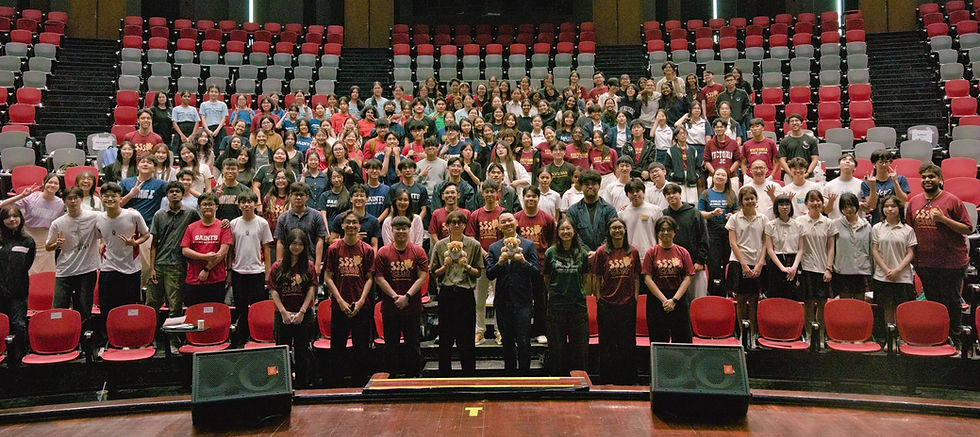
Airgorithm joined industry leaders at SBF Centre on 2 Oct 2026 for passionate focus group discussions on the National Adaptation Plan (NAP).
What Success Will Look Like
The success of the NAP should not be measured solely by the publication of a document.
Its real success will be demonstrated when:
Businesses become more resilient
Organisations proactively assess climate risks, strengthen supply chains, protect employees, and integrate resilience into business strategy.
Communities become more prepared
Citizens understand climate risks and take practical steps to enhance resilience in their daily lives.
Infrastructure becomes more climate-ready
Buildings, transport systems, utilities, and public spaces are designed and managed with future climate conditions in mind.
Collaboration becomes the norm
Government, industry, academia, and civil society continuously work together to identify emerging risks and co-create solutions.
Resilience becomes embedded in decision-making
Climate adaptation becomes a standard consideration in investment, planning, governance, operations, and public policy.
The Path Forward
The development of Singapore's first National Adaptation Plan represents more than a policy exercise.
It signals a shift towards a future where resilience becomes a national capability and a shared responsibility.
The focus group discussions held across industries demonstrate that the journey is not merely about technical solutions. It is about bringing together passionate individuals, diverse expertise, and practical experiences to shape a climate-ready future.
At Airgorithm, we believe meaningful adaptation will require not only robust policies and scientific knowledge, but also collaboration, innovation, and collective leadership.
The conversations taking place today are laying the foundations for a more resilient Singapore tomorrow.
As we move towards the publication of the NAP in 2027, the opportunity before us is clear: to transform climate adaptation from a response strategy into a shared vision for sustainable and resilient growth.

References
Ministry of Sustainability and the Environment (MSE), Partnering Singaporeans on National Adaptation Plan, 30 July 2026.
Ministry of Sustainability and the Environment (MSE), Year of Climate Adaptation, updated 21 September 2026.
Singapore Economic Development Board (EDB), First Singapore adaptation plan to identify risks and take stock of current measures.
National Climate Change Secretariat (NCCS), Adaptation Efforts.


Comments