
Singapore: A Liveable City?

Updated: Jul 5
Singapore has long been celebrated as one of the world’s most liveable cities.
Yet “livability” is not a static accolade — it is a dynamic balance shaped by employment, social equity, economic resilience, climate action, and food security.

Employment: Strength with Inclusion
Singapore’s resident employment rate remains among the highest globally, a testament to its strong labor market and adaptability. Yet the future of work demands more than numbers. Inclusivity, reskilling, and equitable access to opportunities will determine whether employment continues to be a pillar of livability in a rapidly evolving economy.
Standard of Living: Excellence with Challenges
Ranked #1 worldwide for standard of living, Singapore offers stability, safety, and quality infrastructure. But beneath the accolades lie persistent challenges: housing affordability, income inequality, and social cohesion. A truly liveable city must ensure that prosperity is shared across all segments of society.
Economics: Competitiveness with Equity
Singapore’s economic competitiveness is robust, anchored by innovation and global connectivity. Yet growth alone is insufficient. The next frontier lies in embedding equity and sustainability into the economic model — ensuring that competitiveness does not come at the expense of social or environmental resilience.
Climate Change: Resilience in a City in Nature
The “City in Nature” vision reflects Singapore’s ambition to harmonize urban life with ecological stewardship. Green corridors, biodiversity initiatives, and emissions reduction strategies inspire confidence. Still, rising sea levels, carbon intensity, and regional climate risks demand systemic decarbonization and climate‑data literacy to safeguard both competitiveness and livability.
Food Security: Towards Self‑Sustainable Sources
A liveable city must also be a nourished city. With over 90% of food imported, Singapore faces a strategic vulnerability. Urban farming, aquaculture, and agri‑tech innovation are reshaping the landscape — from vertical farms to rooftop gardens, aquaponics to AI‑driven crop monitoring. These initiatives reduce reliance on imports, cut transport emissions, create green‑collar jobs, and strengthen community engagement. Food security is therefore not a separate agenda but a vital pillar of livability, ensuring resilience extends from housing and employment to the nourishment of its people.
Airgorithm at NTU Social Science Challenge 2026
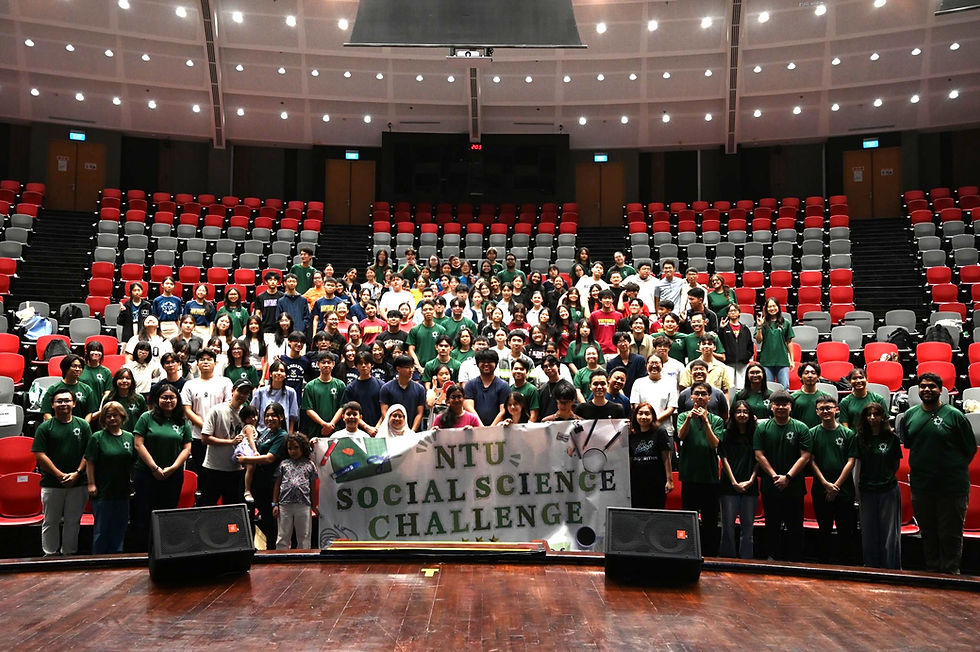
🔹 Context of the Challenge
The NTU Social Science Challenge 2026 brought together pre‑university students across Singapore to debate and design solutions around the theme “Singapore: A Liveable City?”. Over several weeks, teams explored pressing issues — from employment opportunities and economic resilience to standards of living and climate change adaptation. The finals will culminate on 18 July 2026, marking a milestone in youth‑driven policy dialogue.
🔹 Dimensions of Livability in Singapore
Dimension | Current Strengths | Challenges Ahead |
Employment | High resident employment rate (82.8% for ages 25–64 in 2026) | Ageing workforce, need for reskilling and inclusive opportunities |
Standard of Living | Ranked #1 globally for standard of living in 2026 | Rising housing costs, income inequality, affordability pressures |
Economics | 2nd most competitive economy globally (IMD 2026) | Balancing growth with social equity and sustainability |
Climate Change | Strong resilience planning, “City in Nature” vision, food security “30 by 30” strategy | Rising sea levels, carbon intensity, need for systemic decarbonization |
🔹 Airgorithm’s Role
At NTU SSC 2026, Airgorithm engaged students at its booth to demonstrate how emissions sensing and climate‑data literacy can empower communities. By connecting data with action, Airgorithm showcased how technology can accelerate decarbonization while supporting broader social goals like employment and economic resilience.
Data as foundation: Evidence‑based insights are critical for policy credibility.
Youth engagement: Students’ curiosity and dialogue highlight the importance of climate‑data literacy in shaping future leaders.
Partnerships: Collaboration with educators and innovators ensures sustainability is not siloed but integrated into Singapore’s livability framework.
🔹 Thought Leadership: Singapore’s Path Forward
Singapore’s livability rests on balancing three interdependent outcomes:
Competitive economy — sustaining innovation and jobs.
High quality of life — ensuring affordability, inclusivity, and wellbeing.
Sustainable environment — embedding stewardship into urban planning.
Airgorithm believes that climate‑tech innovation is the connective tissue across these outcomes. By embedding real‑time emissions sensing into decision‑making, Singapore can:
Strengthen economic competitiveness through green industries.
Enhance quality of life by reducing pollution and improving resilience.
Advance sustainability goals aligned with global benchmarks.
🔹 Closing Reflection
The NTU SSC 2026 demonstrates that youth voices are not just participants but co‑architects of Singapore’s future. Their passion for employment, economics, standards of living, climate change, and food security reflects a holistic vision of livability.
Airgorithm is proud to partner in this journey, where data meets dialogue and dialogue drives resilience.
Together, we steward. Together, we sustain.


Comments